
Quality Zone’s produce business began in February 2026 after Abdelrahman Gad and Megahed Amin had accumulated 30 years of combined work experience across the MENA region. Both founders are Egyptian, and both had seen the same structural problem: strong capability at origin was not always translated into the exact information international buyers needed to make a confident decision.
The resulting model is straightforward: Egyptian sourcing capabilities combined with Dutch commercial presence. The purpose is not to add another layer of vague communication. It is to make each layer of the order clearer—from the first enquiry to inspection, packing, transport preparation, and buyer follow-up.
The problem is often translation, not production
An importer may describe a programme through grade, count, tolerances, packaging, residue policy, delivery term, and arrival window. A farm or packing partner may think first in terms of variety, field condition, harvest timing, pack-out, and what is operationally possible that week. Both views are valid, but an order becomes fragile when nobody translates between them. Quality Zone’s role is to turn buyer language into clear origin-side instructions and return origin realities as usable commercial choices.
- Write the product specification before discussing a final price
- Separate confirmed facts from indicative availability
- Return exceptions and alternatives in writing
What must be confirmed at origin
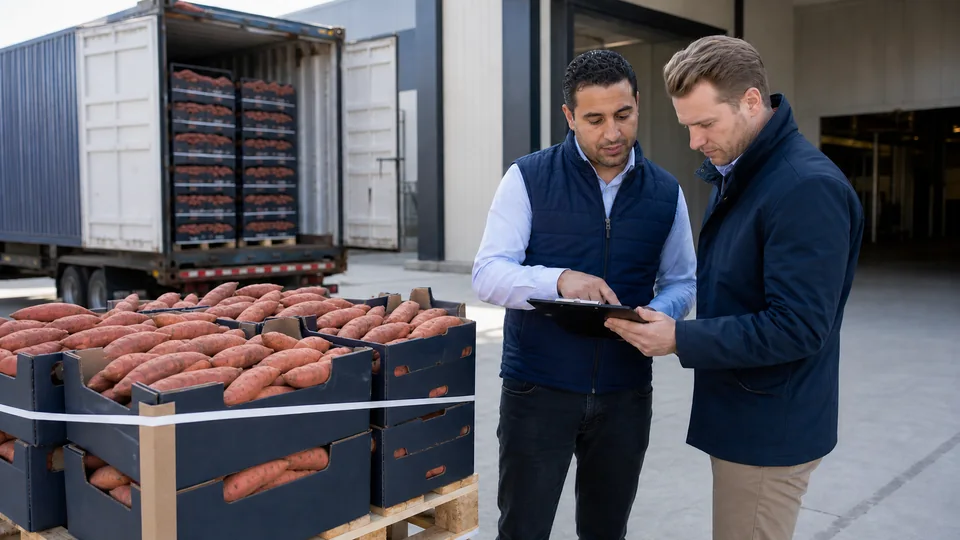
Origin-side coordination should test the enquiry against the actual crop and route. Variety, size or grade, defect tolerances, packaging material, net weight, label fields, traceability, inspection point, pre-cooling, container settings, and loading window should be agreed for the specific lot. The Egyptian side coordinates with farms and packing partners so the final product can be inspected and prepared under conditions suited to the commodity and journey.
Why Dutch commercial presence matters
The Netherlands is a central fresh-produce market and a practical gateway to European distribution. For Quality Zone, the Dutch side is where buyer relationships are developed, market requirements are clarified, and regional commercial and distribution connections are strengthened after produce leaves Egypt. Proximity to buyers makes follow-up more direct and helps keep the commercial conversation connected to what was agreed at origin.
A two-sided model for better decisions
No structure removes agricultural or logistics risk. The value of a connected structure is that questions, limits, and exceptions can surface earlier. The buyer receives a clearer view of what can be supplied; farms and packing partners receive a clearer view of what acceptance requires. That is how Quality Zone aims to build a dependable route for Egyptian fruit and vegetables from Egypt through the Netherlands to international markets.
What buyers should include in the first enquiry
A useful first enquiry does not need to be perfect. It should identify what is already known and make undecided points visible. This lets the sourcing side test feasibility without silently assuming details that may change the product, packing, route, or price.
- Product, variety, size or grade, and acceptable tolerances
- Packing preference, quantity, destination, and desired loading date
- Preferred Incoterm, certifications, residue policy, and required documents
Quality Zone’s enquiry form captures these fields while still allowing a general question. Share what you know; our team can help turn it into a specification that the sourcing side and buyer can evaluate together.
Company perspective based on Quality Zone’s operating model. Product availability, specifications, compliance, routes, and commercial terms remain order-specific and must be confirmed in writing.
 Cairo, Egypt
 Malden, Netherlands